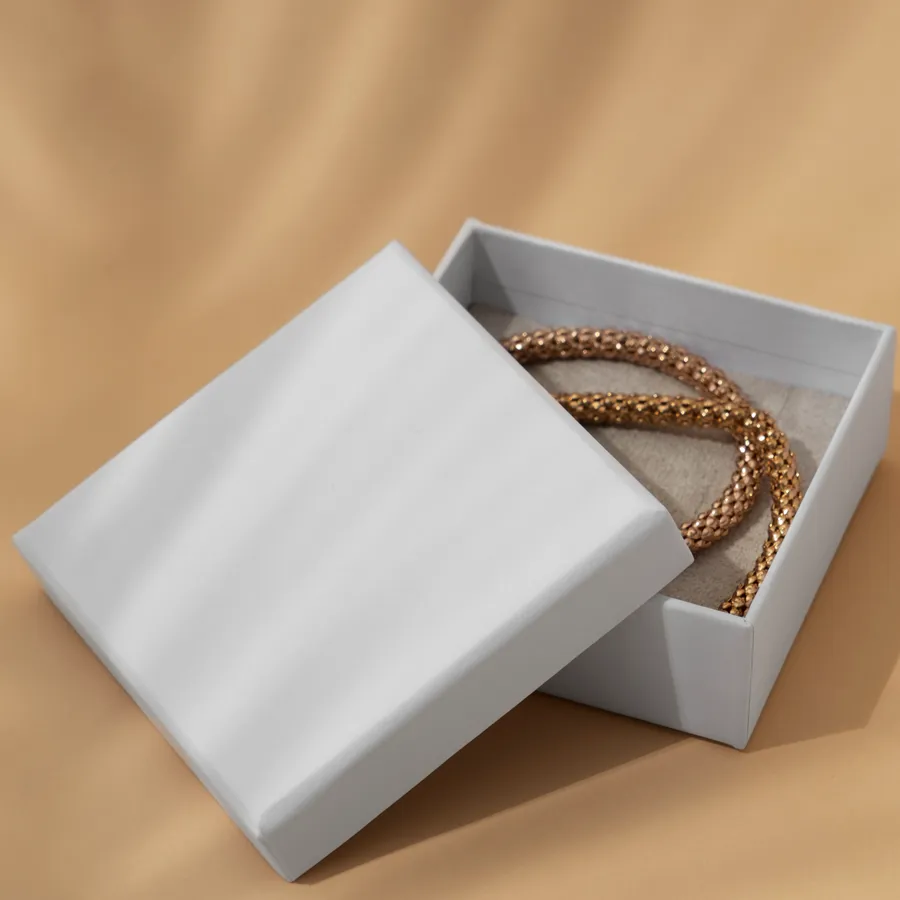
Custom Bracelet Boxes: That Feels as Good as the Product
Bracelets are small, but they carry an outsized amount of emotional weight. Most are bought as gifts, worn as personal statements, or purchased as a little reward to oneself — which means the box they arrive in isn't just packaging, it's part of the moment. A crumpled poly bag does the bracelet no favors, no matter how well it's made. That's the entire reason bracelet boxes exist as their own category rather than getting lumped in with general jewelry packaging.This guide covers what actually matters when picking bracelet packaging materials, structure, branding, and a few practical details that are easy to miss until an order goes wrong.
Why Bracelets Need Purpose-Built Packaging
Unlike a shirt or a pair of socks, a bracelet is small enough that presentation does almost all the work. There's no way to "feel" the quality of a bracelet through a plastic bag the way you can with a folded piece of clothing. The box has to communicate value on its own — through weight, texture, and how the lid opens. This holds true across nearly every accessory category, which is part of why brands browsing packaging solutions for clothing and accessories tend to treat bracelet boxes with the same care as their apparel lines.
There's also a practical side. Chains tangle, clasps catch on loose fabric, and delicate charms can scratch against other items if there's no dedicated compartment. A well-designed box solves both problems at once: it looks good and it keeps the piece intact until it reaches the wearer.
Choosing the Right Structure
Most bracelet packaging falls into a few structural categories, each suited to a different kind of product and price point.
Rigid boxes with a foam or velvet insert are the standard for anything mid-range to premium. The insert holds the bracelet in a fixed position, which prevents tangling and gives the piece a "display" quality even before it's taken out of the box. Cardboard boxes with a simple slot or cushion work fine for lighter, more casual bracelet lines where cost efficiency matters more than a luxury unboxing moment.
For brands selling multiple accessory types, it's worth thinking about how bracelet packaging fits alongside the rest of the lineup. Someone shopping for a bracelet gift set might also be looking at necklace boxes for a matching set.Watches often get grouped into the same gifting occasions too, so keeping a consistent packaging style across watch boxes and bracelet packaging makes the whole collection feel more coordinated.
Materials That Make a Difference
The material choice affects both durability and perceived value:
Rigid board the go-to for premium bracelet lines, offering a sturdy, high-quality feel that holds its shape well over repeated use, which matters for gift boxes that get reopened often.
Cardboard lightweight and budget-friendly, suited to casual or fashion-forward bracelet brands selling at higher volume.
Kraft stock a natural, understated look that pairs well with handmade or artisan bracelet lines leaning into a sustainable brand story.
Interior lining matters just as much as the outer shell. Velvet or foam inserts prevent scratching and keep the piece from sliding around, which is especially important for bracelets with delicate chains, charms, or gemstone details that can chip if they knock against the box walls during shipping.
Branding Without Overdoing It
Bracelet boxes are small canvases, so branding needs to be intentional rather than crowded. A single embossed or foil-stamped logo on the lid usually reads better than a full-color print covering the whole surface. Clean typography, a consistent color palette matched to your broader brand, and a subtle texture on the exterior tend to outperform busier designs when it comes to perceived quality.
Interior branding is worth considering too a small printed card with care instructions or a thank-you note adds a personal touch without requiring any change to the box structure itself. This kind of detail costs very little but tends to leave a disproportionately good impression, especially for gift purchases.
Matching Packaging to How the Product Is Sold
How a bracelet is sold changes what the box needs to do. A bracelet sold as part of a gift set benefits from a more elaborate unboxing experience a lift-off lid, tissue paper, maybe a ribbon closure. A bracelet sold as a standalone, everyday-wear item usually just needs to be protected and presented cleanly, without the extra ceremony that would add cost without adding much value.
Brands that sell across multiple jewelry categories often find it worth reviewing options like ring boxes alongside bracelet packaging, since matching structures and finishes across the line reduces both design time and manufacturing complexity.
The same logic applies to cufflink boxes a shared visual language across small accessory packaging makes a brand's full jewelry line feel intentional rather than pieced together.
Practical Details Before Placing an Order
A few things worth confirming before committing to a bulk order:
Check that the interior insert is actually sized for your bracelet's chain length and clasp style a mismatch here is one of the most common (and avoidable) packaging complaints.
Ask about minimum order quantities early, since smaller accessory categories sometimes carry different MOQs than apparel-sized packaging.
Request a sample or 3D mockup before full production, particularly if you're using a custom insert shape.
Confirm turnaround time if you're packaging around a seasonal gifting period, since jewelry packaging demand tends to spike around holidays.
If you're not sure which structure or material fits your specific bracelet line, it's usually faster to talk it through directly rather than guessing and reordering later.
Bringing It All Together
Bracelet boxes might be small, but they carry a lot of responsibility protecting a delicate product while also delivering the kind of presentation that matches how meaningful the piece often is to the person receiving it. Getting the structure, material, and branding right doesn't require an elaborate design, just attention to the details that actually affect how the product looks and feels when the box is opened.
If you'd like guidance on sizing, materials, or pricing for your specific product, it's easy to connect with our packaging experts directly.
Frequently Asked Questions
1. What makes bracelet boxes different from general jewelry packaging?
Bracelet boxes are shaped and lined specifically to prevent chains and clasps from tangling or scratching, which generic jewelry packaging doesn't always account for.
2. What materials are bracelet boxes usually made from?
Rigid board, cardboard, and kraft paper stock are the most common choices, often paired with velvet or foam interior inserts.
3. Can bracelet boxes be customized with my brand's logo?
Yes, embossing, foil stamping, full-color printing, and custom color matching are all standard options.
4. Do bracelet boxes come with interior inserts?
Most premium options do, typically foam or velvet-lined inserts designed to hold the bracelet in place and prevent tangling.
5. What's the minimum order quantity for custom bracelet boxes?
This varies by supplier and material, though smaller accessory packaging sometimes has different minimums than standard apparel boxes.
6. Can I request a sample before placing a bulk order?
Yes, physical samples or 3D digital mockups are typically available to confirm design and fit before full production.
7. Are eco-friendly bracelet box options available?
Yes, kraft stock and recyclable materials are commonly used for brands that want a more sustainable packaging option.
8. How long does production usually take?
Timelines vary, but it's worth confirming turnaround in advance, especially around holiday or gifting seasons when demand tends to increase.
9. Should bracelet packaging match my other jewelry packaging?
It's a good idea. Consistent structure and branding across bracelet, necklace, and ring packaging makes a product line feel more cohesive.
10. How do I choose the right bracelet box for my product?
Start with the bracelet's chain length, clasp type, and price point, then match those to a box structure and material built for that category.